
We fight food waste every single day
Food waste is a major focus area for Compass Group. The production, transport, storage of food, and food waste impact our environment. Utilizing 100% of the potential of raw materials reduces food waste and helps to reduce the environmental burden, including CO2 emissions.
Every year, about one-third of all food produced is wasted. That is far too much, and we are therefore actively working to contribute to driving a permanent change.
We measure food waste to understand the footprint it leaves. And we engage in close collaborations with our cafeteria customers to halve food waste by 2030.
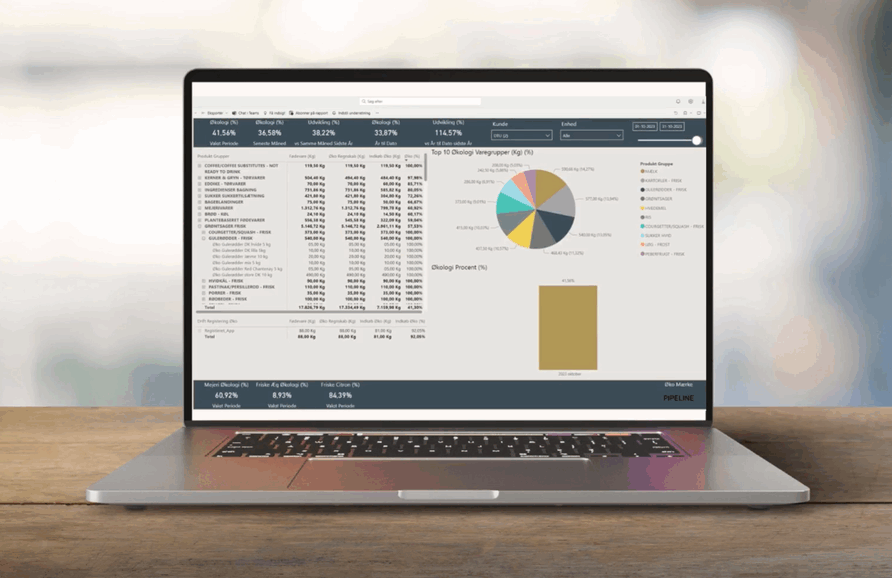
Food waste and measurement technology
Food waste is not only a moral issue but also a significant contributor to climate change. Food waste represents wasted energy used to grow, harvest, process, and prepare food. Additionally, food waste generates methane gases, which are more potent than CO2.
To reduce food waste, it is essential to understand why food is wasted. Therefore, in 2023, we introduced new measurement technology in the canteen units we operate. This measurement allows our kitchen staff to continuously monitor and reduce food waste, contributing to our shared goal of reducing food waste.
Food Waste Initiatives in 2025
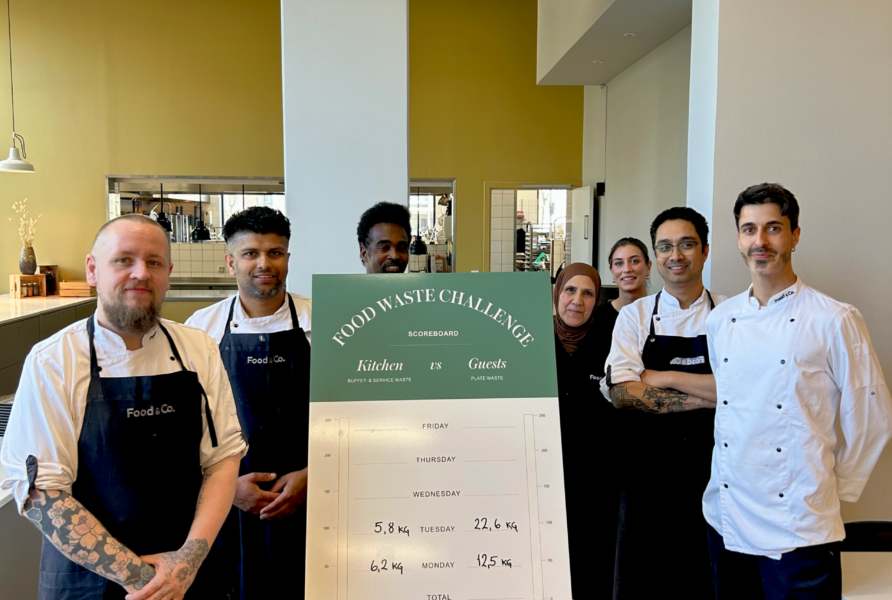
In 2025, we launched the Food Waste Challenge as a shared initiative across our operations to place even greater focus on reducing food waste in our daily activities. The initiative was introduced as part of our global Stop Food Waste Day campaign.
Learning remains a key priority for us. Throughout 2025, we held learning sessions where colleagues from across our operations shared practical experiences, challenges and solutions. These sessions brought together data, operational practices and professional expertise, enabling our kitchens to learn from one another and turn insights into action in their day-to-day work. In close collaboration with our operational teams, we also developed a practical guide featuring tips and best practices for reducing food waste.
The guide brings together practical solutions from our kitchens and serves as a shared resource to support efforts ranging from planning and portion sizing to making better use of ingredients and leftovers.
Cookbook with inspiring food waste recipes
We aim to engage our many daily dining guests in recognizing the possibilities of using 100% of the potential of raw materials when cooking at home. Therefore, Compass Group has developed a cookbook that inspires people to see the potential in what normally ends up in the trash.
