
On reaching this point, our ESG Manager, Anne-Sofie Hattesen, explains:
“First of all, many of our clients have ambitious goals in this area, but we also have our own climate strategy. So there is commitment on both sides.
When we change what is served in the canteens, we also change what thousands of people eat for lunch every day. This is where we can really make an impact.”
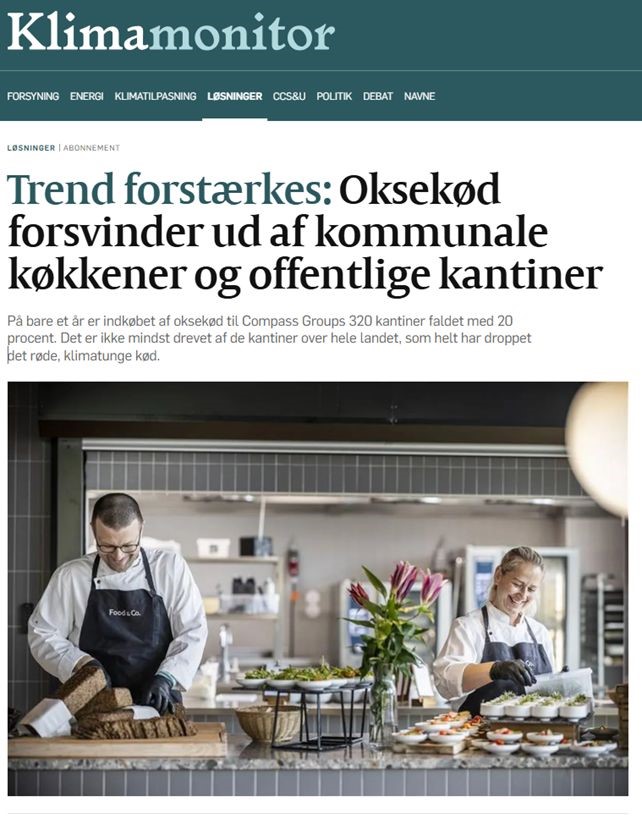
In a new article, Klimamonitor spoke with several of our clients, including the University College Nordjylland (UCN) and the University of Copenhagen, where we operate the canteens.
At UCN, last week we served oven-baked eggplant ensemble with seasonal vegetables and herbs one day, and oven-baked fries with grilled lemon and creamy pumpkin purée, with the option of juicy falafels or welfare pork, the next.
Not a single item on the menu contained beef – neither that week nor in any other week.
At the University of Copenhagen, they were among the first to completely phase out beef already in 2020. As Chief of Staff Kristian Boye Petersen explains in the article, it happened “without much philosophical debate – it just felt like the natural choice.”
Beef accounts for about half of the climate footprint of an average Danish diet, so the reduction across our canteens makes a real difference.
According to Michael Minter, head of Concito’s Food Unit, canteens are key to driving greater change. In the article he says:
“When we look at initiatives aimed at changing Danes’ eating habits, this is definitely one of the most impactful. I actually believe the biggest driver is that in canteens and public kitchens, people are presented with tasty and nutritious meals without meat.”
Read the full article on Klimamonitor: https://lnkd.in/dK3DTDp3